

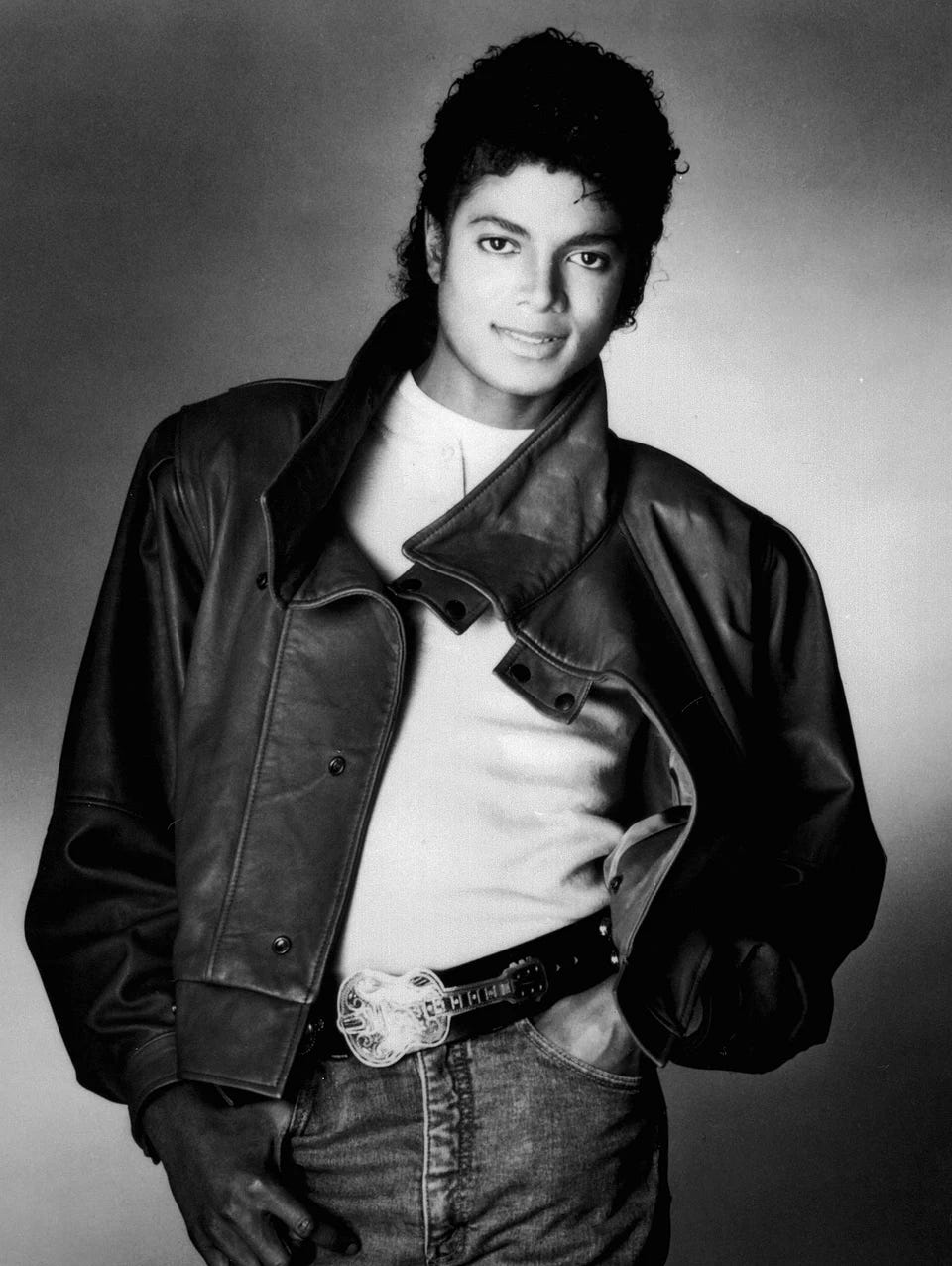
Before I ever heard Michael Jackson on the radio, I met him as a cartoon.
Jackson 5ive was a Saturday‑morning animated TV series that ran for two seasons in 1971 and 1972. I was six years old. My parents controlled the car radio, and it only played country music. Votes from the back seat were not allowed.
Michael wasn’t part of my soundtrack yet. He was a moving, singing cartoon character who somehow still felt real. A few years later, he showed up again. This time on TV during prime time.
In 1976, The Jackson 5 launched a short‑lived variety show that later became The Jacksons. It only ran for a dozen episodes, but it placed Michael squarely in the center of a television tradition that had been shaping entertainers long before MTV ever existed.
The variety shows of the 1970s followed an entertainment formula that dated back over a century to vaudeville. Fast‑moving mixes of comedy, music, dance, novelty acts, and short sketches designed to capture and keep the attention of the whole family.
The Jacksons were made for that stage.
Their precision, polish, and charm translated instantly to television, and Michael especially absorbed everything. Show after show, he was learning stage discipline, camera awareness, and how to forge an emotional connection with millions of unseen viewers at once.
Before music videos were a thing, Michael was being trained, almost accidentally, for a medium that didn’t exist yet.
And then MTV arrived.
And when Thriller began airing, the world finally caught up to what Michael Jackson had been preparing for all along.
Thriller
When Thriller hit MTV, it wasn’t just another three‑minute song accompanied by a video. It was an event. You stopped whatever passive listening activity you were doing and paid attention.
During the next fourteen minutes, the boundaries between film, music, and television disappeared. Michael Jackson transformed MTV, turning what was once promotional filler into something cinematic, unforgettable, and impossible to ignore.
In that moment, he stopped feeling like just a gifted human being to me. He became a superhero whose power was movement, timing, and the ability to make the entire world lean forward at once.
As someone who had admired Michael’s music for most of my life, missing this movie was never an option. I loved his artistry deeply, even while being dimly aware that his childhood, especially his relationship with his father, had not been an easy one.
I walked into the theater expecting nostalgia and perhaps a restrained portrayal of family struggle, neatly culminating in Michael’s success.
Yet, not long into the movie I realized (much like Ola Ray did in the Thriller video), that I was about to get more than I bargained for. What followed focused on a childhood I wasn’t prepared to sit with.
Another Part of Me
Almost immediately, I realized this story was going to linger in places I usually avoid.
Early in the movie, we see a young Michael being whipped by his father, Joe, with a belt for not wanting to practice because he was tired.
Hearing Michael, played so vividly by newcomer Juliano Valdi, screaming and crying was almost more than I could stand.
The scene was difficult to watch, not because it felt exaggerated, but because it felt disturbingly believable.
Joe Jackson is portrayed as a man driven by a fierce desire for excellence, convinced that relentless discipline was the only way his children could survive and succeed in a harsh world. That ambition deeply shaped Michael.
From an early age, Michael was different. Gifted, sensitive, and self-aware, he carried the weight of expectation in ways his brothers did not.
Practice was constant. Mistakes were costly. Approval felt conditional. Love, when expressed, was tightly bound to performance.
Talent does not compensate for trauma, and success does not heal what was wounded early.
The movie suggests that Michael found ways to escape the pressure he could not control. Imagination became a refuge. Fantasy offered relief when reality felt unsafe.
Animals provided companionship and comfort long before fame gave him the means to create an entire world of his own. Long before Neverland, the film portrays Michael keeping a llama, a giraffe, and his monkey Bubbles while he was still living at home.
These were not indulgences. They were coping mechanisms. Safe places carved out by a child who needed room to breathe.
As Michael grew older, his talent flourished spectacularly. Discipline produced precision, mastery, and brilliance unlike anything the world had seen.
His success made him visible everywhere. His performances inspired awe, admiration, and global devotion. But visibility is not the same as invulnerability.
The world celebrated what Michael became, while the pain formed early remained largely unseen and unresolved. His achievements did not reach backward to undo what shaped him.
Talent does not compensate for trauma, and success does not heal what was wounded early.
Man in the Mirror
Watching Joe physically discipline Michael was painful. I found myself asking a simple question. How could a father strike a child so gifted and gentle for being tired?
What surprised me most was where my mind did not go.
It didn’t return to the times I felt I had been over‑disciplined as a child. Instead, I was carried back to moments from my life as a father. Times I disciplined my daughter and son with a swat or a spanking.
As tears welled up, I remembered a few moments when that discipline came from anger rather than love. The weight of that realization settled heavily on me.
For a brief and deeply uncomfortable moment, I felt as though I had stepped into Joe Jackson’s place, hearing the cries I never wanted to hear again.
Fortunately, the violence itself was only briefly revisited, though its presence lingered. What became clear was that Michael carried this tension with his father for years, long after the bruises faded.
I don’t pretend to know the burdens Joe Jackson carried or what shaped him into the parent he became. Sitting in the theater, I had to ask myself a harder question. What unexamined baggage did I bring into my own parenting?
Choices I made while trying to be a “good” parent have haunted me for years. Was it time for me finally to deal with that pain and move on?
I have good relationships with my adult children now. Why do I struggle with something they’ve put behind them?
Insight may begin in stillness, but it rarely ends there. Something in us wants to move once the truth is seen.
Shake Your Body (Down to the Ground)
Michael found it difficult to remain still when he was recording. From Berry Gordy to Quincy Jones, producers often reminded him to stand still behind the microphone. He allowed the music to flow through his entire body.
Without formal dance training, he became one of the most influential dancers the world has ever seen. Rather than being defined by his pain, Michael chose expression.
He turned discipline into movement and giftedness into entertainment, using his body to say what words could not.
The film took us back to 1983 and the making of the Beat It video. I realized I could not keep my own feet still. My legs moved instinctively during those scenes, and I wondered if I was bothering the stranger sitting next to me.
Michael’s music stirs something physical. It makes you want to move, shout, and celebrate. At this point in my life, though, I suspected if I tried to shake my body down to the ground, I might not get back up.
We revisited the 1984 Pepsi commercial accident where Michael suffered second‑ and third‑degree burns after a pyrotechnic malfunction. During his recovery, we see him visiting other hospital patients, offering encouragement while still healing himself.
Michael later donated the full settlement he received from Pepsi to the hospital where he was treated. Over time, generosity became part of who he was.
In 2000, Guinness World Records recognized him as the pop artist who supported the most charities, thirty‑nine in total.
Michael did not erase his pain. He transformed it into beauty, expression, and joy. From the rewards of his success, he repeatedly reinvested in people.
His story does not show what is guaranteed. It shows what is possible. You do not have to be healed to be helpful. You do not have to be whole to create something good.
Watching his story, I realized this was not just about him anymore.
You Are Not Alone
No one’s life is perfect. Every one of us encounters pain, trauma, or hardship. While pain may shape us, it does not have to define us. Much of the pain we carry comes from earlier chapters of our lives, yet we still walk around carrying the emotional shrapnel they left behind.
The question is not whether we have pain. The question is what we will do with it.
For me, this movie helped me see unresolved pain connected to the parental choices I made when my children were younger. Awareness was the first step. Until something is named, it cannot be handled honestly.
Ignored pain does not disappear. It gets transferred. It shows up in our reactions, strains our relationships, and quietly creates patterns we never intended to repeat.
Healing is not only about reducing pain. Healing happens when we expand our capacity for joy, connection, and presence.
Sometimes that looks like stillness and reflection. Sometimes it looks like movement. Dancing. Shouting. Even shaking our body down to the ground.
The good news is this. Pain does not have to stop with us. All of us can choose to redirect what hurt us toward creativity, kindness, discipline, and intention, outward for the good of others.
And if you are carrying something heavy, know this. You are not alone. You are not the only one sorting through the past. You are not the only one wondering how to turn pain into something meaningful. You are not behind, broken, or disqualified.
So here is the simple question I will leave you with. What are you going to do with the pain you carry? Will you let it quietly shape your reactions, or will you choose to turn it toward something that brings life to you and to others?
Wow! This is great!
Thank you, Deanna. I appreciate it!